18 family history interview questions to ask your grandparents
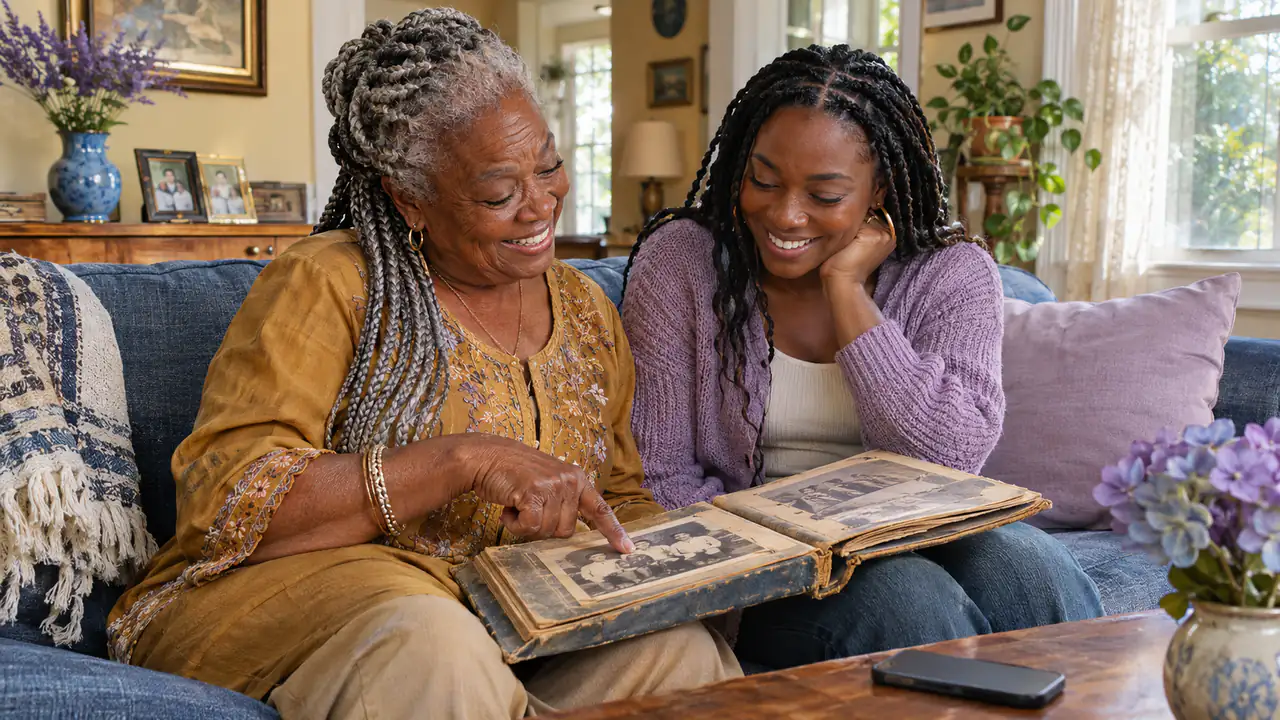
Put a familiar photo in front of your grandparent and ask three questions. What do you notice first? What happened just before this picture? What do you want us to remember about that day? Ask before you record.
How do you interview a grandparent about family history?
Set aside 15 minutes for one memory. Bring a photo or an object they can talk about, ask whether you can take notes or record, and agree on who can hear the story.
Say you bring a photo of Grandpa in front of a grocery store. Ask him what he recognizes. If he points to the shop next door and starts talking about his first job there, follow that story. Ask what his first shift was like.
| Time | What to do | One line to try |
|---|---|---|
| First two minutes | Settle in and agree about recording and sharing. | "Would it be okay to record us? I can keep it between us until you've heard it." |
| Next ten minutes | Ask one opening question and follow the details they remember. | "What happened right before this picture?" |
| Last three minutes | Check the names, the detail you want to save, and who can hear it. | "What part of that story would you like the rest of us to remember?" |
Six questions about growing up
Pick the question your grandparent can answer from a place they remember. When they say "we used to" or "everybody knew," ask who was there one particular time.
- When you came home from school, what was the first sound you usually heard?
- Who could walk into your kitchen without knocking, and what did they usually come for?
- Which corner or storefront would you take me to if we could visit your old neighborhood together?
- What did you and your friends do on a day when you had a little money to spend?
- Who taught you to do something you still do the same way today?
- What was the first thing you bought with money you'd earned yourself?
Six questions about family habits
Start with a habit you have seen. If the casserole always goes in the blue dish, ask when that started. The same answer may tell you who bought the dish and why it survived three moves.
- Who taught you a recipe by feel, and what did they tell you to look or listen for?
- What's something my parent did as a kid that would sound exactly like them today?
- Who had a particular seat at the table, and how did it become theirs?
- What did your family do when guests stayed longer than expected?
- What did you bring from your first home to the place you live now?
- What saying did you hear as a child that eventually came out of your own mouth?
Six questions about turning points and what stayed
Let them choose how far they want to go with these. If a question touches a difficult move, job, or relationship, offer to pause or ask about another time.
- When you moved somewhere new, who made it feel like you belonged?
- What small decision ended up changing what happened next?
- How did you get good at a job or skill that felt impossible in the beginning?
- If you could hand me one object from a year that changed your life, what would it be?
- What is one thing you enjoy doing now that your younger self would never have predicted?
- Which ordinary day would you choose to spend with us again?
How do you record and save a family interview?
Ask permission, then test the recorder on your phone in a quiet room. Say both names and the date at the start. Save the recording with a filename your family can search for later.
The Smithsonian oral history guide recommends testing the sound and using photos or other familiar objects to start a conversation. Set the phone down between you and play back a few seconds to check that you can hear both voices. Leave a pause after a question. Your grandparent may be trying to recall a name or a place.
Use a filename such as 2026-11-22_Lena-and-Marisol_blue-cooler.m4a and keep the extension your recorder supplies. In a separate note, write down who may hear the recording and where each story starts. For example, mark "04:18, packing peaches for the lake." Keep a backup and offer your grandparent a copy.
Turn one answer into a keepsake
Imagine Lena telling her granddaughter Marisol about the blue cooler in a photo. On Sundays she set it in the back of the station wagon for the drive to the lake. She wrapped the peaches in a dish towel so they would stay whole. Her youngest used to call from the back seat, "Peaches first."
Marisol could write the story on the back of the photo or send a clip to the people who were there. If Lena wants to turn the memory into a song, Marisol can give SongHug the lake trip and the family phrase as text. Ask again before sharing the original recording, using a quote in the song, or sending it to more people.
A short song brief from the interview
A warm acoustic song for Grandma Lena, from Marisol.
On Sundays, she packed peaches in a dish towel inside the blue cooler and drove us to the lake.
Use "Peaches first" as a line the family can sing. Leave out the year because we're unsure.
Frequently asked questions
Can I do a family history interview over a video call?
Yes. Send the photo beforehand so you can both look at it. Ask before recording the call, or take notes with permission and read back anything you want to quote.
How many questions should I ask in a 15-minute interview?
Bring three questions and expect to spend most of the time on one story. Ask for a detail they can picture, then give them time to finish before you move on.
Can I save a family story if my grandparent doesn't want to be recorded?
Ask whether they would be comfortable with you taking notes. Read back anything you want to quote exactly and ask who can see it. You can also enjoy the conversation and leave it there.
What should I write down if we disagree about a date?
Keep the memory with the name of the person who told it. Mark the date as approximate or unknown, and add the other version with its own attribution. Check photos, letters, or records later if everyone wants to know the date.